

AI for insurance service and document follow-up
Policy questions answered, missing documents chased, renewals kept on schedule and complex cases sent to the right person.
Updated
Quick answer
Trilix AI builds AI agents for brokers, insurers and claims administrators. They answer routine policy questions, chase missing documents, keep renewals on schedule and hand complex or sensitive cases to your team. Most first builds are live in about 10 days, priced as a setup fee plus a monthly fee scoped on the first call.
Brokers, insurers and claims administrators answer the same policy and claim-status questions all day, and chase missing documents by email and phone.
We build agents that answer the routine questions, request and track missing documents, keep renewals moving and hand complex or sensitive cases to your team, with a record of every step.
Who is it for?
- Insurance companies & brokers
- TPAs & claims administrators
- Employee benefits providers
- Customer & renewal service teams
- Regulated teams that need a record of every step
Where does insurance service lose time?
Repetitive Inquiries
Teams spend time answering repeated customer and policy questions.
Missing Documents
Customer files remain incomplete without structured follow-up.
Renewal Gaps
Renewal workflows delayed by manual coordination and missed deadlines.
Escalation Gaps
Complex or sensitive cases need proper human routing and ownership.
Limited Auditability
Manual workflows make it harder to track status, ownership, and activity.
How does it work for an insurance team?
Connected to your inbox, phone line and policy or claims system. People make the decisions.
- 1ReceiveCollect inquiries from email, calls, WhatsApp, forms, portals, or internal systems.
- 2ClassifyIdentify request type — policy inquiry, document submission, claim status, renewal, complaint, or escalation.
- 3CollectRequest missing documents or required information based on approved workflows.
- 4EscalateRoute sensitive, complex, or unresolved cases to the appropriate team.
- 5ReportSummarize request volume, pending documents, escalation rates, renewal workflows, and service bottlenecks.
Missing renewal documents
An example of how it plays out.
- What happens
- A policy renewal requires customer documents that have not been received.
- What the system does
- Trilix AI triggers a follow-up request, tracks completion status, escalates overdue items, and updates the service dashboard.
- The result
- The renewal workflow becomes visible, assigned, and easier to manage before deadlines are missed.
What does it track?
A good place to start: Automate missing document follow-up and escalation for renewals, claims, or policy service workflows.
Free tools: Missed call calculator · AI receptionist vs staff cost
Response Time
Speed of first response to customer inquiries.
Missing Document Volume
Open document gaps across active workflows.
Follow-Up Completion
Rate of resolved document follow-up requests.
Escalation Volume
Cases routed to human teams for resolution.
Renewal Workflow Status
Visibility into pending and completed renewals.
Service Reporting Speed
Time to generate service visibility reports.
Related services
- Custom AI voice agentsInbound and outbound voice agents built on your phone lines and systems.
- AI automation agencyWhat an AI automation agency does, how it prices and how to pick one.
- Workflow automationPOS to QuickBooks, follow-ups, reports and approvals, built around your tools.
- Enterprise AIData ownership, hosting choices, governance and how procurement works with us.
Questions operators ask
Something else on your mind? Ask us directly or call 416-262-2723.
Which insurance workflows are a good fit?
Repetitive, rules-based work: policy inquiries, missing document follow-up, renewal reminders, claim status routing and service escalations. Decisions that need underwriting or claims judgment stay with your team.
Can it chase missing documents automatically?
Yes. Following your approved workflow, it requests missing documents or information, sends follow-ups and flags files that stay incomplete, so the team always sees what is still pending.
How does it support auditability?
Every interaction, document request and escalation is logged, and role-based routing and approval steps can be built into the workflow. Reports summarize request volume, pending documents and escalations.
Is it only for insurers, or also for brokers and TPAs?
It is built for insurance companies, brokers, TPAs, claims administrators and employee benefits providers: any team handling a high volume of customer inquiries and document workflows.
Built for
The businesses we build for
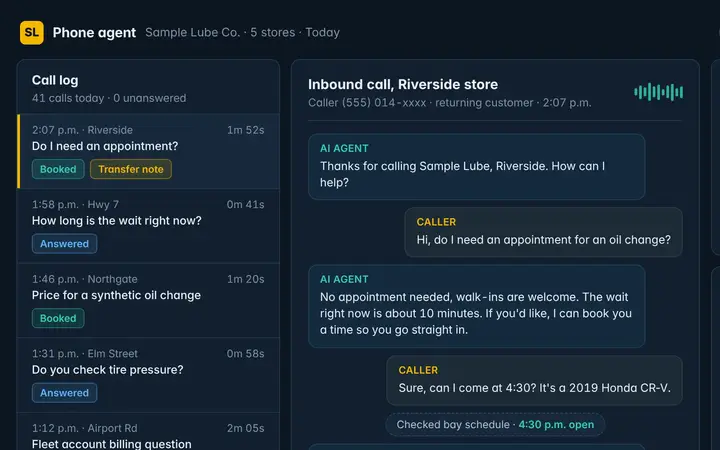 Auto service & car washPhone agent · Cameras · Dashboard
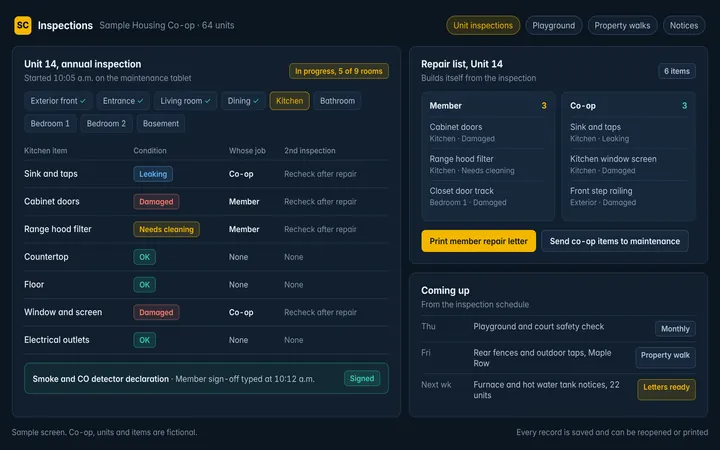 Property management & co-opsBack office
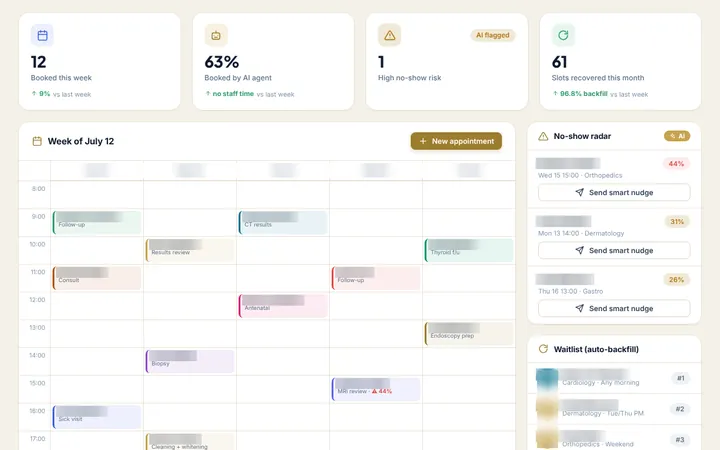 Clinics & healthcarePhone agent · Back office · Dashboard
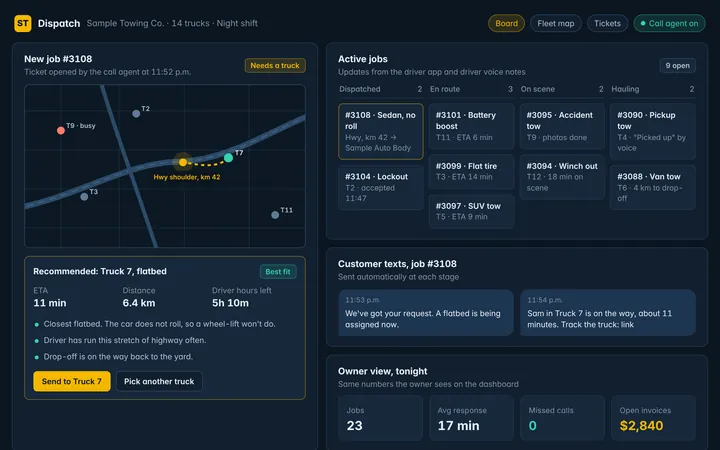 Logistics & field servicePhone agent · Dashboard · Back office
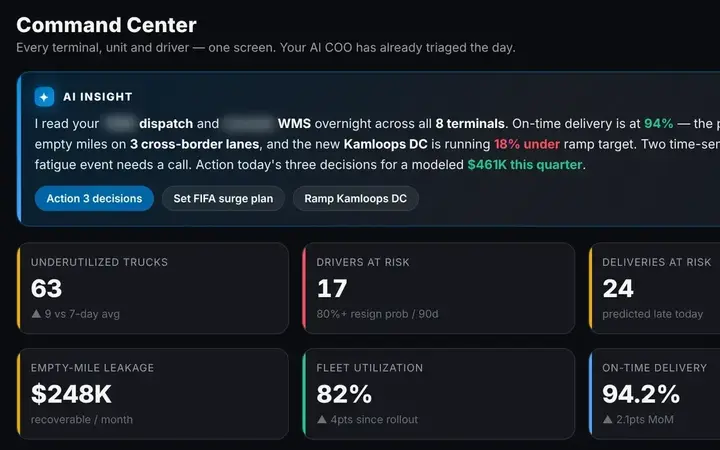 Holding groups & multi-businessDashboard · Back office
Thumbnails are sample screens and demo builds with fictional data.
…They can build out anything. It started out just automating some reports. And then I was like, hey, can you do this? He’s like, absolutely.
Video testimonial
Watch the clip on LinkedInYou give us one call and access. We do the rest.
No long discovery project and no new software for your team to learn first. We start with what costs you most and ship it.
- 1
One 30-minute call
You walk us through how the business runs and where the time goes. We show what we’ve built for other operators and sketch your one-year roadmap.
- 2
You give us access
Logins or read access to the systems involved: phones, POS, accounting, cameras. We handle the setup from there.
- 3
We build, you check
We build around your own data and show it working before anything goes live. Your part is a short review.
- 4
Live in about 10 days
Then we keep it running every month and work down the roadmap with you. Bigger builds go live in phases.
Start with the work that costs you most.
Tell us how the work runs today. We’ll show you what we’ve built for similar businesses and what we’d build first for yours.