

A command center
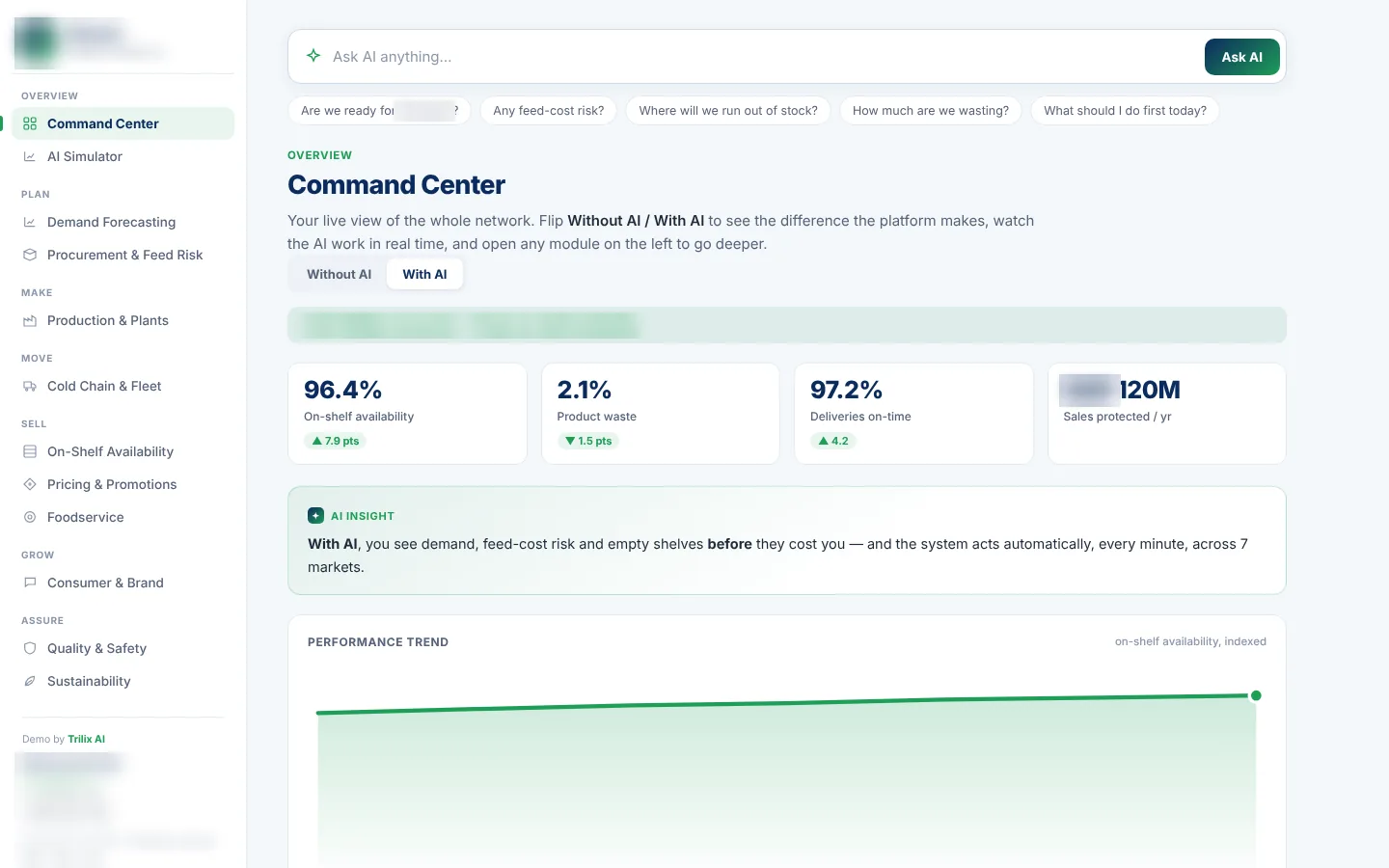
The main numbers on one screen, a feed of what the system has flagged and a list of open issues, each with an "investigate and act" button. There's also a stripped-back version for executives.
A supply chain command center that follows the business from the forecast to the shelf, with one screen for each step.
This is a demo build. It runs on sample data. We keep the manufacturer's name private.
At a glance
Demo build, sample data
Dairy has one of the hardest supply chains there is. Milk doesn't wait. Demand jumps with hot weather and holidays. Feed prices move with droughts and late ships. A large fleet of refrigerated trucks has to keep everything cold, and a shelf that's empty for one afternoon sends the shopper to a competitor.
Most of this is run in separate systems by separate teams. Planning, procurement, plants, fleet, sales and quality each have their own reports. By the time a problem shows up in the monthly review, the product has spoiled or the sale is gone.
The main numbers on one screen, a feed of what the system has flagged and a list of open issues, each with an "investigate and act" button. There's also a stripped-back version for executives.
Drag sliders for temperature, weeks to a seasonal peak and promotion intensity. The demand, production, stockout risk and feed plan update as you move them.
Demand, procurement, plants, cold chain, shelf availability, pricing, foodservice, brand, quality and sustainability, each opening with a plain recommendation.
How the business plans. How the planners forecast, where the data lives and which late decisions cost the most.
The real data. Sales, plant, fleet and quality data connected, keeping the modules that matter most.
A first version in about 10 days, usually one or two areas like shelf availability or the cold chain, then out from there.
The manufacturer owns its data and the system.
See also AI for retail, franchise and F&B and AI for industrial and manufacturing.
Book a call and we'll show you the demo, from the forecast to the shelf.