

A morning command center
What was handled overnight, what needs a clinician today, the reading queue, recent calls and suggestions for the operations team.
Draft reports, scribe notes, a call agent and smart scheduling. The system drafts, the clinician decides.
This is a demo build. It runs on sample data. We keep the clinic's name private.
At a glance
Demo build, sample data
This is a mid-sized medical center with radiology, dermatology, dental and a range of outpatient clinics.
Clinicians spend too much of the day on paperwork: notes after visits, dictated reports, chasing results. The front desk is buried in calls. No-shows leave gaps that never get filled. The people running the place have no single picture of the day.
They wanted the busywork off people's plates, with every clinical decision still made by a clinician.
What was handled overnight, what needs a clinician today, the reading queue, recent calls and suggestions for the operations team.
Radiology, dermatology and dental, each built the same way: the system prepares a draft and the specialist reviews, edits and signs.
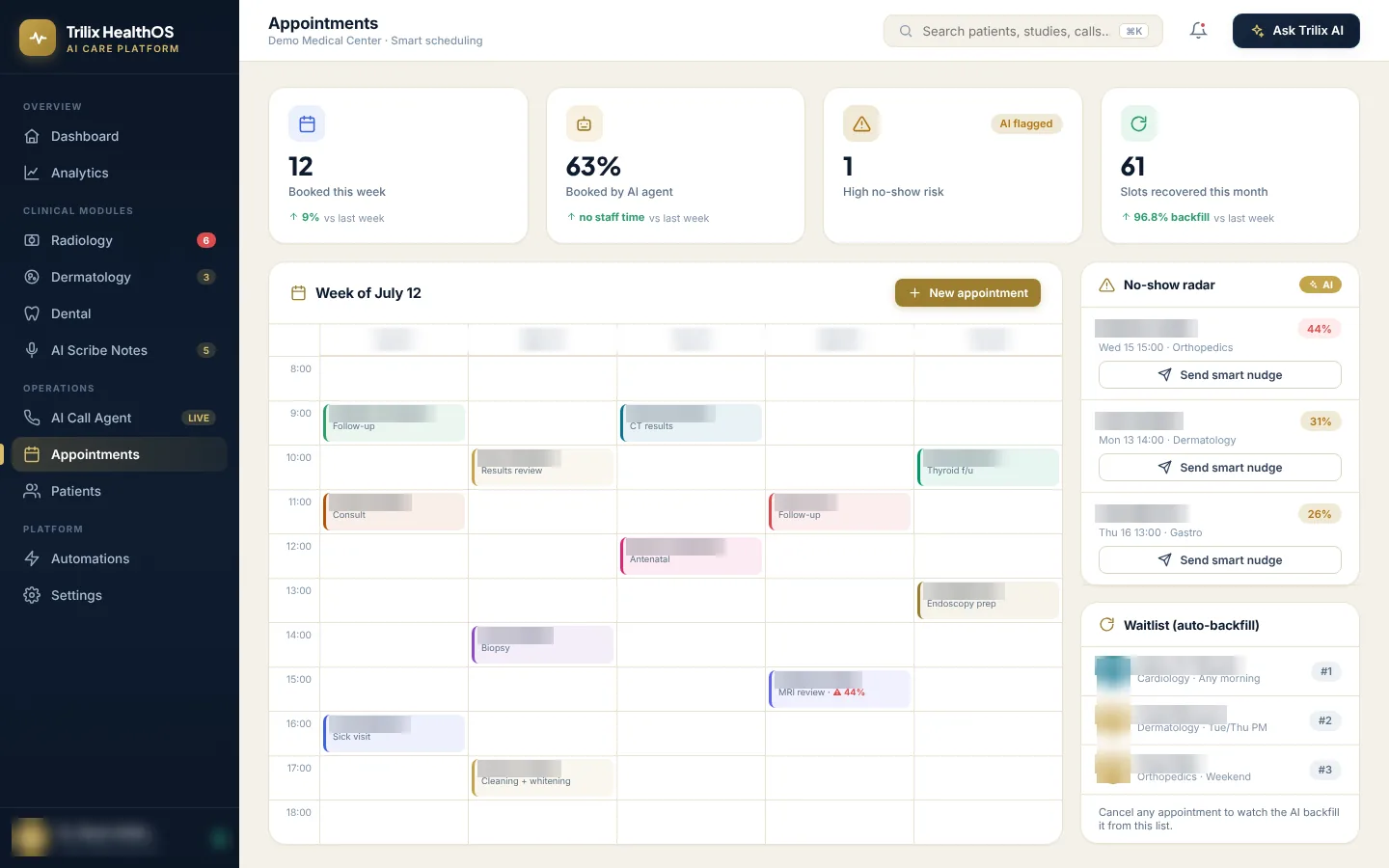
A scribe for visit notes, a phone agent, a scheduling calendar with a no-show radar, and automations for reminders, refills and report delivery.
How the clinic runs. Departments, referral paths, escalation rules and who signs what.
Its real systems. Scheduling, imaging and records, connected in place of the sample data.
A first version in about 10 days. Clinicians set how much each feature can do on its own. Every action is logged and can be reversed.
The clinic owns its data. It stays under the clinic's control and isn't used for anything else.
See also AI for clinics and healthcare and workflow automation.
Book a call and we'll show you the demo, department by department.