

Demo build on sample data

A control tower for trucking fleets, tanker or LTL

One screen for the whole fleet. It reads dispatch, telematics and terminal data overnight and lists the morning's decisions in order.

This is a demo build. We built it in two versions on the same base: one for a liquid bulk tanker carrier hauling fuel and chemicals, one for a carrier running LTL, truckload, intermodal and warehousing. Both run on sample data. We keep the carriers' names private.

At a glance

Demo build, sample data

Business
Tanker and LTL carriers, North America
What we built
  • A dispatch copilot
  • In-cab safety
  • Terminals, maintenance and customers
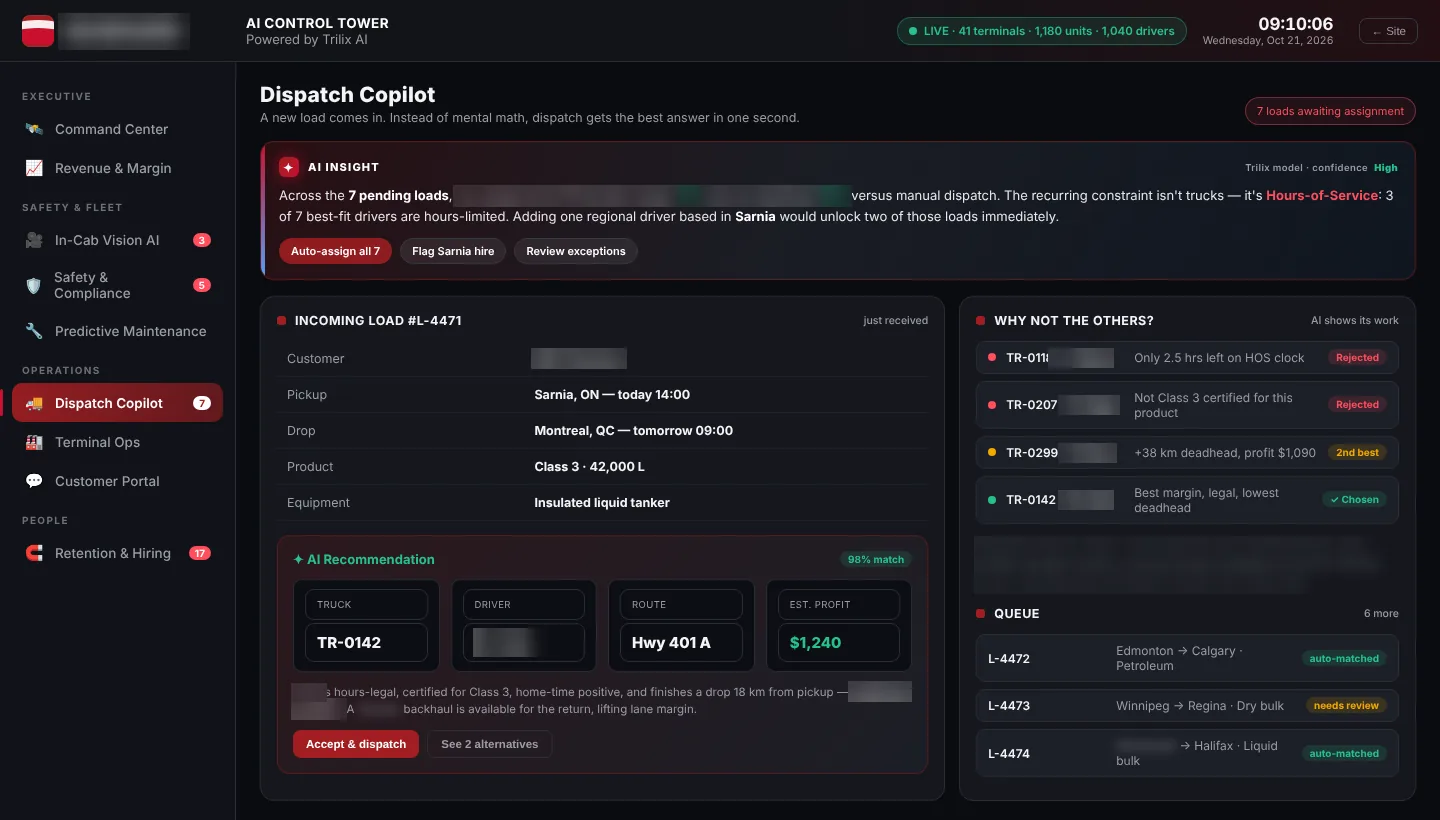
Trucking demo build, tanker version: a dispatch copilot recommending a truck, driver and route for a new load, and a panel explaining why the other drivers were rejected.
Dispatch copilot, tanker fleet demo.Demo build, sample data.
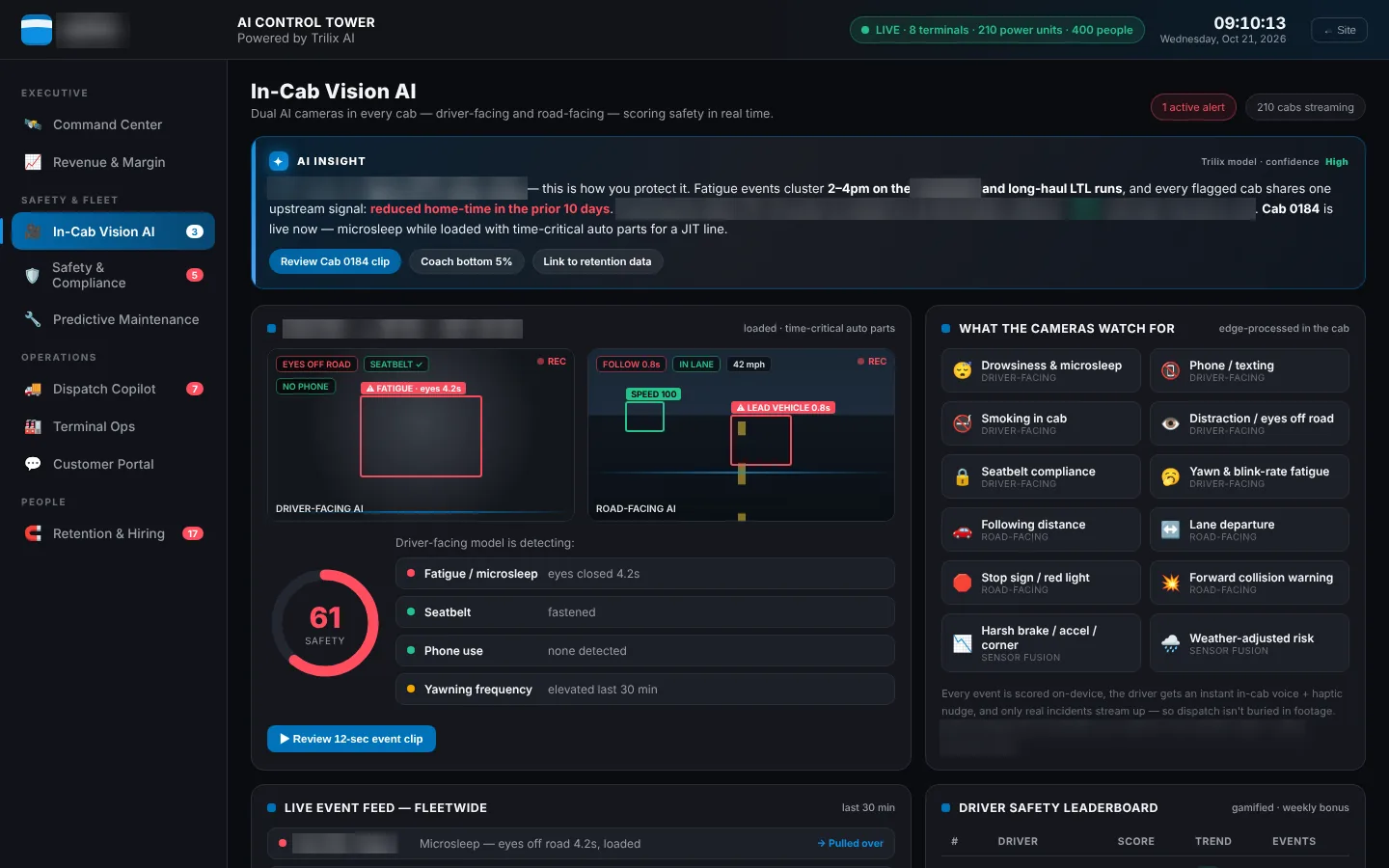
Trucking demo build, LTL version: driver-facing and road-facing camera views, a safety score and the list of events the cameras watch for.
In-cab safety, LTL fleet demo.Demo build, sample data.

The problem

A tanker carrier has more rules than most fleets. The driver has to be certified for the product. The trailer has to fit the load. Hours of service run out mid-route. Shipping papers and placards have to be right every time.

A mixed LTL and 3PL carrier has a different headache. Every service pulls on the same trucks, drivers and dock doors. A part for a just-in-time auto line can't be late. A reefer can't fail with food on board. Two half-empty LTL loads going the same way should be one truck.

In both, dispatchers juggle it in their heads across dozens of terminals. Trucks run empty on the way back. A pump seal or a reefer unit wears out on a loaded trailer. Customers keep calling to ask where their load is. The dispatch system, the warehouse system and the telematics each hold part of the answer, and they don't talk to each other.

What we built

A dispatch copilot

For each new load it picks the truck, driver and route, checking hours, certifications, deadhead and backhaul. For LTL it also handles consolidation and trailer cube. A "why not the others" panel shows each rejected driver and the reason, so dispatch can check the pick.

In-cab safety

Driver-facing and road-facing cameras flag fatigue, phone use, distraction, seatbelt, following distance and lane departure. Event clips go into a review queue and a fleet-wide feed, and the footage is there when a not-at-fault claim comes in.

Terminals, maintenance and customers

A terminal and cross-dock view, maintenance ranked by failure risk, and a customer text line for ETAs, documents and delay alerts.

What's in it

  • Command center with a fleet and terminal map, at-risk deliveries, underused trucks, safety flags and a ranked list of decisions.
  • Hours-of-service predictions with drafted re-plans before a violation.
  • Paperwork checks: hazmat placards, shipping papers and seal photos for tankers, dangerous goods documents for LTL, plus fuel tax filing.
  • Route and driver risk for the next 48 hours, including weather and mountain passes in winter.
  • Predictive maintenance on tractors, tankers, trailers and reefer units, with bay booking.
  • Terminal view with load times, queues, idle labour and gate entries logged by camera.
  • Customer text line for live ETA, delivery documents, invoices, delay alerts and pickup booking.
  • Driver retention flags and applicant screening around the clock.
  • Revenue and margin by lane, with empty-mile cost and unbilled detention.
  • A chat panel for questions like "which terminals are behind?" or "any breakdowns coming?"

What it would take to go live

How dispatch decides today. Which products need which certifications, how loads get planned, where the cross-dock backs up, which customers can't take a late delivery, and what's already in the cab.

The systems the carrier already runs. Dispatch, warehouse, telematics and cameras, with the rules the safety and operations teams already follow.

A first version in about 10 days, starting with the two or three modules that matter most. The carrier owns its data the whole way through.

See also AI for logistics and field service and executive dashboards.

Run a fleet?

Book a call and we'll show you the demo for your kind of freight.